.png)
Freshwater Fishing Tips: Techniques for Catching More Fish

Updated: Sep 20
Freshwater fishing can get complicated fast. Walk into a tackle shop or spend ten minutes watching fishing videos and you'll hear about dozens of baits, techniques, colors, electronics and pieces of gear you supposedly need.
But catching fish consistently usually comes down to something much simpler: find the fish, figure out what they're doing, and adjust your presentation until they respond.
Whether you're fishing for largemouth bass on a lake, working a river or just trying to put more fish in the boat, these are some of the freshwater fishing techniques and lessons I've learned from spending time on the water.

Start With Where the Fish Are
The best lure in the world won't catch much if there aren't any fish around it.
Before worrying about color or bait selection, I look at where fish should be positioned.
Fish location changes throughout the year, and even throughout a single day, but there are several areas I consistently pay attention to:
Points and drop-offs
Grass and weed edges
Laydowns and submerged timber
Docks and other man-made cover
Creek channels and depth changes
Areas holding visible baitfish
Structure and cover aren't the same thing, either. Structure is the shape and contour of the lake bottom—points, ledges, humps and channels. Cover is the stuff fish can actually relate to, like grass, wood, docks and rocks.
Find places where several of those things come together and you've often found somewhere worth fishing.
Match Your Presentation to the Conditions
One of the biggest mistakes anglers can make is deciding how they're going to fish before the fish have told them what they want.
Some days bass will chase a moving bait halfway across the lake. Other days you'll practically have to put a finesse bait in front of their face.
Water clarity, temperature, fishing pressure, weather and the activity level of the fish can all affect what presentation works.
In stained water, I may lean toward something that creates more vibration or has a stronger profile. In clear water or around heavily pressured fish, I'll often go toward a more natural presentation.
And don't overlook retrieve speed.
Sometimes changing how you're fishing the bait matters more than changing the bait itself. Speed it up. Slow it down. Let it fall. Twitch it. Drag it. Pause it.
Let the fish tell you what they want.
Freshwater Fishing Techniques That Actually Work
There isn't one technique that's going to work everywhere, every day. Having several presentations you understand well gives you the ability to adjust as conditions change.
Topwater Fishing
Few things in freshwater fishing beat watching a bass explode on a topwater bait.
Poppers, walking baits, frogs and buzzbaits can all be effective when fish are willing to feed near the surface. I especially like looking for surface activity, shallow cover and baitfish.
Don't assume topwater is strictly an early-morning technique, either. If conditions are right and fish are looking up, it can produce at other times of the day.
Jigs
A jig is one of the most versatile bass baits you can keep in the boat.
You can drag one along the bottom, hop it around rock, pitch it into cover or swim it through the water column. Changing the trailer can also completely change the profile and action.
When fish are relating to bottom structure or heavy cover, a jig is always worth considering.
Spinnerbaits and Bladed Jigs
Moving baits are excellent when you need to cover water and locate active fish.
Spinnerbaits give you flash, vibration and a relatively weed-resistant presentation. Bladed jigs provide a different vibration and can be especially effective around grass and shallow cover.
Both also give you another opportunity to experiment with trailers until you find the profile and action the fish prefer.
Drop Shot and Finesse Worms
When the bite gets difficult, finesse presentations can save a day.
A drop shot lets you keep a soft plastic in the strike zone without constantly moving it away from the fish. Finesse worms can also be extremely effective on shaky heads and other light presentations.
This is especially useful in clear water, deeper water and around pressured fish.
Our Twitch Switch is a 5.25-inch finesse worm designed for exactly this type of fishing—enough movement to get noticed without requiring an aggressive presentation.
Soft-Plastic Minnows
A soft-plastic minnow is one of the most versatile bait profiles in freshwater fishing because there are so many ways to fish one.
You can swim it, jig it, drop-shot it, hover it or rig it on a jighead. The key is matching the size and movement of the baitfish the bass are feeding on.
Our Tracer Shad is a 4-inch finesse minnow I use when I want a natural baitfish profile and subtle action.
Hover Rig Fishing
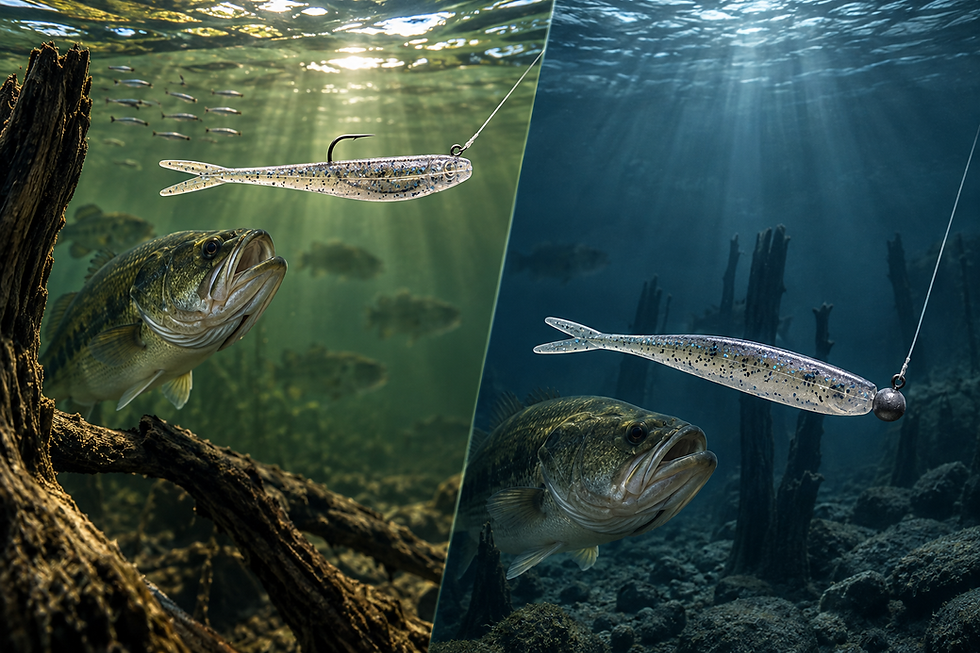
Hover-style presentations have become especially effective for targeting suspended fish.
Instead of forcing the bait through the water, you're trying to keep a natural-looking minnow around the fish and let subtle movement do the work.
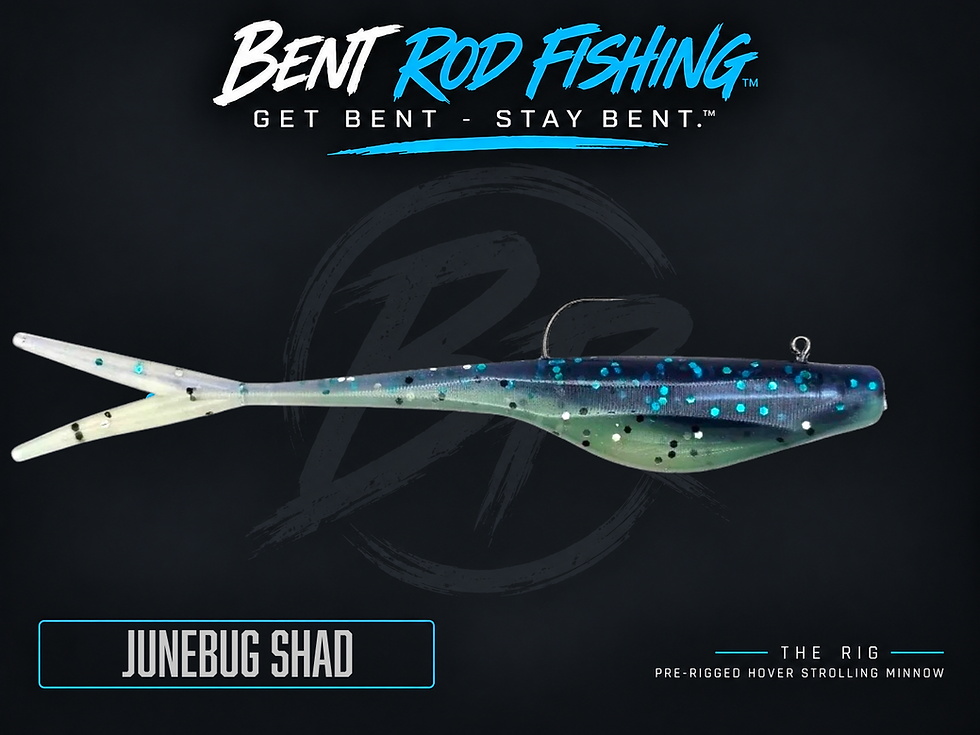
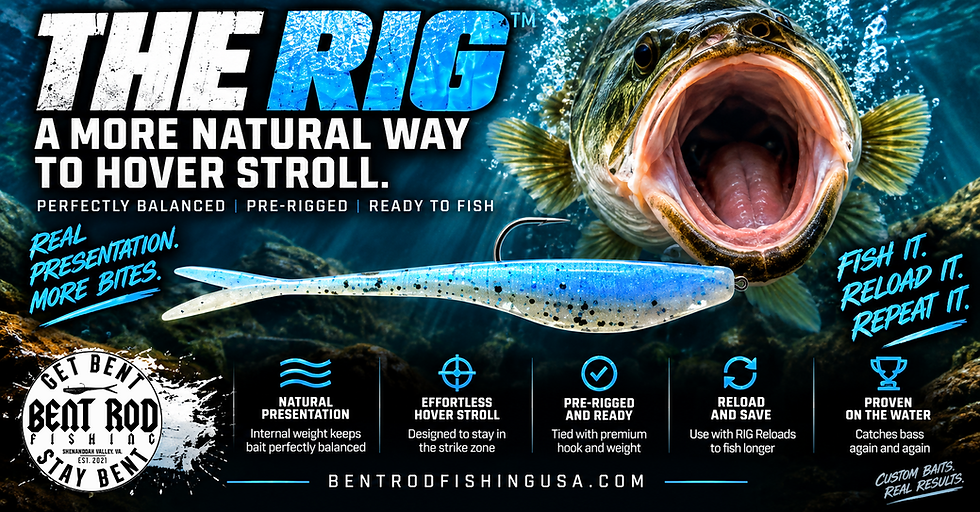
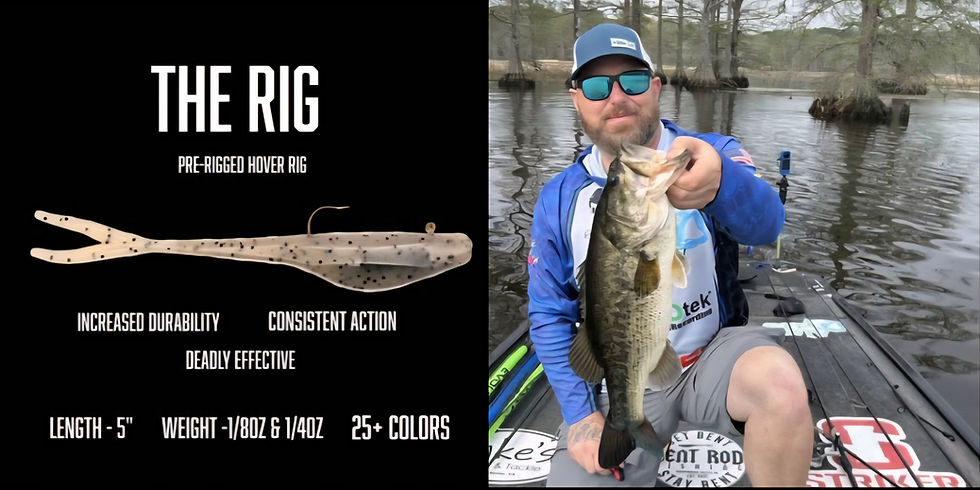
That's the problem we built The RIG to solve. It's a pre-rigged hover rig minnow with the weight contained inside the bait, creating a balanced presentation that's ready to fish without having to rig an insert weight into a soft plastic yourself.
You don't need forward-facing sonar to fish this way, either. Electronics can make suspended fish easier to locate, but the presentation itself can be used anywhere you believe fish are holding off the bottom.
How to Read a Freshwater Lake
Learning to read water will catch you more fish than owning another box full of lures.
When I get on a lake, I'm looking for clues.
Are baitfish near the surface? Are fish positioned on points? Is there healthy grass? Are bass buried in cover or suspended away from it? What depth seems to be holding life?
Even birds can tell you something. Diving birds or surface activity can reveal concentrations of baitfish.
Then start putting the pieces together.
If you catch one fish, don't immediately treat it as a random bite. Ask why that fish was there.
Depth? Cover? Structure? Current? Shade? Baitfish?
Catch another fish under similar circumstances and you may have found a pattern.
Electronics Are Tools, Not Requirements
Modern fishing electronics are incredible.
Traditional sonar, side imaging and forward-facing sonar can help anglers understand what's happening beneath the surface. Forward-facing sonar can be especially useful because it allows you to see fish ahead of the boat and watch how they react to your presentation.
But none of it replaces learning how fish behave.
You can absolutely catch fish without forward-facing sonar.
I use electronics as another source of information. They can help locate fish, identify structure and show how fish react, but you still have to make the decisions about what to throw and how to fish it.
The electronics give you information.
You still have to interpret it.
Choosing Soft Plastics for Bass
Don't make soft-plastic selection more complicated than it needs to be.
I generally think about three things:
Profile. Action. Presentation.
If bass are feeding on small baitfish, a minnow profile makes sense. If they're feeding around the bottom, a worm or bottom-oriented presentation may make more sense. If fish are aggressive, you can often get away with more action. When they're pressured or inactive, subtle movement can be the better choice.
Color matters, but I don't believe there's one magic color that catches bass everywhere.
Start with something appropriate for the water clarity and forage, then pay attention to what the fish tell you.
That's also why I wouldn't carry twenty versions of essentially the same bait. I'd rather have several different profiles that allow me to change how I'm presenting something to the fish.
Adjust Until the Fish Tell You You're Right
This may be the most important freshwater fishing tip in this entire article:
Don't get married to your plan.
I've had plenty of days where what I thought should work didn't.
That's fishing.
Change your depth. Change your retrieve. Change the profile. Change the action. Try a different color. Move to different structure.
When something finally works, don't just celebrate the bite. Figure out what changed.
That's how one fish turns into a pattern.
And that's how you become a better angler instead of simply getting lucky.

The Best Freshwater Fishing Technique Is the One the Fish Want Today
There isn't a single best bait or freshwater fishing technique.
Conditions change. Lakes change. Seasons change. Fishing pressure changes.
The anglers who consistently catch fish are usually the ones willing to pay attention and adjust.
Learn to find fish. Understand why they're there. Give them different presentations until they show you what they want.
And when the fish want something different?
Fish different.
GET BENT - STAY BENT.
Comments