.png)
Fishing Equipment: How to Choose the Right Gear for Bass Fishing

Updated: Sep 20
Choosing fishing equipment for bass fishing can get complicated fast. Walk into a tackle shop and you'll find entire walls of rods, reels, line, lures and fishing tools — all promising to help you catch more fish. The truth is, you don't need all of it.
The right fishing gear depends on where you're fishing, how you're fishing and what you're trying to accomplish. A setup that's perfect for throwing a lightweight finesse bait isn't necessarily what you want for pulling a bass out of heavy cover.
I've spent a lot of time on the water bass fishing, but I've also spent years designing and making soft plastic baits. That has taught me something important: your equipment should match the presentation, not the other way around.
So instead of giving you a giant shopping list, let's break down the fishing equipment you actually need, what each piece does, and how to choose gear that makes sense for the way you fish.
What Fishing Equipment Do You Actually Need For Bass Fishing?
You can catch bass with a surprisingly simple setup. At its core, your fishing equipment needs to let you cast the bait effectively, control it the way it's designed to be fished, detect a bite and land the fish.
For most bass anglers, the basics are:
Rod and reel: Your rod provides the power, action and sensitivity for the presentation you're fishing, while the reel controls your line and retrieve.
Fishing line: Monofilament, fluorocarbon and braided line all behave differently. The right choice depends on the presentation, cover and water you're fishing.
Terminal tackle: Hooks, weights, jig heads, swivels and other small pieces of tackle connect your bait to the rest of your setup.
Lures and soft plastic baits: This is where you're actually presenting something to the fish. Different profiles, actions, sizes and presentations solve different problems on the water.
Basic fishing tools: A good pair of pliers or hook removers, line cutters and a way to organize your tackle will cover most of what you actually need.
You can add electronics, specialized rods, expensive reels and enough tackle to make your boat sit three inches lower in the water later. 😂 But none of that replaces understanding why you're using the equipment you already have.
Choosing the Right Rod and Reel for Bass Fishing
There isn't one perfect rod and reel for bass fishing. The right setup depends on the weight of the bait you're throwing, the presentation you're using and the type of cover you're fishing around.
Spinning setups are a great choice for lighter presentations. Finesse techniques like drop shots, small soft plastics and lightweight jig heads are generally easier to cast and control with spinning gear.
Baitcasting setups become useful as bait weight increases or when you need more power and control. They're commonly used for jigs, Texas rigs, spinnerbaits, bladed jigs and other presentations where heavier line or stronger equipment makes sense.
When choosing a rod, pay attention to both power and action. Power describes how much force it takes to bend the rod, while action describes where along the rod blank that bend occurs. They're two different things, and both affect how the rod fishes.
A medium or medium-heavy rod can cover a lot of bass fishing, but don't choose one simply because somebody says it's the “best bass rod.” Start with the bait and presentation you plan to fish, then choose the rod and reel that allow you to fish it effectively.

Choosing the Right Rod for Bass Fishing
If there’s one piece of fishing equipment that affects how a bait feels and fishes, it’s the rod. But there isn’t one “best” bass fishing rod. The right rod depends on what you’re trying to do with it.
Three things matter most: power, action and length.
Power describes how much force it takes to bend the rod. Light and medium-power rods work well for finesse presentations, while medium-heavy and heavy rods are better suited for larger baits, heavier weights and fishing around cover.
Action describes where the rod bends. A fast-action rod bends mostly toward the tip, while moderate-action rods flex farther down the blank. That difference affects sensitivity, casting, hooksets and how the rod keeps a fish pinned.
Length affects casting distance, accuracy and leverage. Shorter rods can give you more control in tight situations, while longer rods generally provide more casting distance and leverage.
That’s why my own collection looks like the picture above. I’m not collecting fishing rods just to collect them. Different presentations call for different tools.
Choosing the Right Reel for Bass Fishing
The reel gets a little simpler. For bass fishing, most anglers are choosing between a spinning reel and a baitcasting reel, and both have a place.
Spinning reels are easy to cast and work especially well with lighter line, smaller baits and finesse presentations. If I'm fishing something light where casting distance or managing lighter line matters, spinning gear often makes sense.
Baitcasting reels give you more control over the cast and work well with heavier line, heavier baits and presentations where accuracy matters. They also give you a wide range of gear ratios, which lets you choose how quickly the reel picks up line.
I don't think of one as being better than the other. They're tools for different jobs. The bait and presentation I'm fishing determine which one I reach for.
Match Your Fishing Equipment to the Presentation
This is where choosing fishing equipment starts to make more sense. Instead of asking, “What’s the best rod and reel?” ask, “What am I trying to fish?”
A lightweight finesse presentation doesn’t need the same equipment as a jig being worked through heavy cover. The weight of the bait, type of hook, line size, cover and how you need the bait to move should all influence your setup.
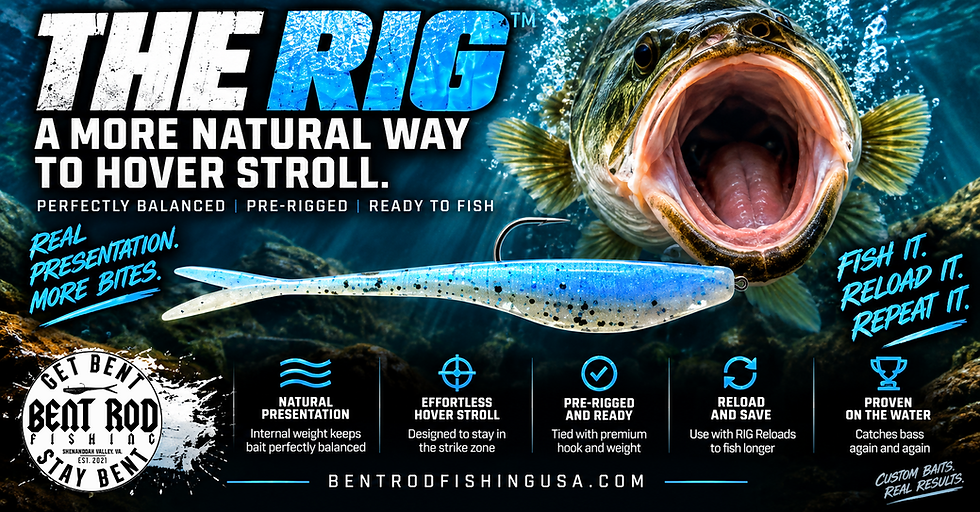
Finesse presentations: For techniques like drop shots, hover rigs and other lightweight soft plastics, I generally want a lighter setup that lets me cast the bait effectively and still feel what it’s doing. Spinning gear is a natural fit for a lot of these presentations.
Texas rigs and bottom-contact baits: Here I want enough sensitivity to feel what the bait is doing on the bottom and enough power to drive the hook home. The heavier the cover, the more power I want in the rod and line.
Moving baits: Spinnerbaits, bladed jigs and other moving presentations can benefit from a setup with enough give to let a fish take the bait while still providing enough power to control it.
Heavy cover: Fishing around thick grass, wood or other heavy cover changes everything. Heavier line and a more powerful rod can help get a hooked bass out before it buries itself somewhere you don't want it.
There are exceptions to all of these. That's part of fishing. But starting with the presentation first makes choosing the equipment a whole lot easier.
Choosing Fishing Line for Bass Fishing
Fishing line is one of the easiest pieces of fishing equipment to overlook, but it can completely change how a bait fishes. The three main choices for bass fishing are monofilament, fluorocarbon and braided line, and each behaves differently.
Monofilament has more stretch than the other options and it floats, which can make it useful for certain topwater presentations. It's also inexpensive and easy to work with.
Fluorocarbon has less stretch than monofilament, sinks and is difficult to see underwater. I use it when I want sensitivity and direct contact with the bait, especially with many finesse and bottom-contact presentations.
Braided line has very little stretch and a lot of strength for its diameter. That makes it useful around heavy vegetation and cover, and it can also be paired with a fluorocarbon leader for finesse fishing.
Just like rods and reels, I don't think there's one fishing line that's best for everything. Match the line to the presentation, cover and conditions you're fishing.
Lure, Soft Plastics and Terminal Tackle
Once the rod, reel and line are figured out, the rest of your fishing equipment is what actually connects you to the fish.
Terminal tackle includes the hooks, weights, jig heads and other small pieces used to rig and present your bait. The right choice depends heavily on the presentation. A lightweight finesse hook and weight are doing a completely different job than a heavy flipping hook and tungsten weight in thick cover.
Then there are the lures themselves. Bass can be caught on everything from crankbaits and spinnerbaits to jigs and topwater baits, but soft plastics are some of the most versatile baits you can carry.
A soft plastic can be fished on the bottom, suspended in the water column, burned like a moving bait or worked slowly when the fish aren't willing to chase. Change the hook, weight or jig head and the same bait can sometimes become an entirely different presentation.
That's one of the reasons I've spent years making and fishing soft plastics. I don't think about a bait separately from the equipment used to fish it. The rod, line, hook, weight and bait all work together as a system.
When you're choosing fishing equipment, start with what you want the bait to do in the water. Then build the rest of the setup around that.
You Don't Need a Ton of Fishing Equipment
One of the easiest mistakes to make in bass fishing is thinking you need a different rod, reel and tackle setup for every technique. You don't.
I own a lot of fishing equipment because I've accumulated it over years and I fish a lot of different presentations. But you can cover an incredible amount of bass fishing with just a few versatile setups.
If you're building your gear collection, start with the presentations you actually fish. Choose a rod and reel that can handle several of them, match your line accordingly, and expand when you find a technique that really benefits from specialized equipment.
Buy equipment to solve a problem — not just because somebody told you that you need it.
The fish don't care how many rods are sitting on your deck. They care about what you put in front of them and how you make it behave.
The Right Fishing Equipment is the Gear That Fits the Presentation
Choosing fishing equipment for bass fishing gets a lot easier when you stop asking, “What gear should I buy?” and start asking, “What am I trying to make this bait do?”
Start with the presentation. Then choose the rod, reel, line and terminal tackle that help you fish that presentation effectively.
You don't need the most expensive equipment. You don't need every specialized setup on the market. And you definitely don't need 20 fishing rods leaning against a dresser like some lunatic. I can say that because those are mine. 😂
What matters is understanding what each piece of equipment does and choosing the right tool for the job.
That's the same philosophy we use when designing baits at Bent Rod Fishing. Start with what you want the bait to do in the water, then build around that.
Fish the presentation. Let the equipment help you do it better.
GET BENT - STAY BENT

Comments